

Minor clashes continue; U.S. claims to have finalized a "memorandum of understanding," Iran denies
On the 28th local time, U.S. officials reported that negotiators from the United States and Iran had reached an agreement on a memorandum of understanding. However, Iranian authorities denied the claim. The U.S. Treasury Secretary declined to confirm the matter.
On the 28th, a new round of military conflict erupted between the U.S. and Iran. Analysts believe that a large-scale escalation is unlikely, and the limited attacks between the two sides are more likely aimed at strengthening bargaining positions in negotiations.
Have you reached an agreement on the memorandum of understanding?
Opinions vary among parties.
U.S. officials say U.S. and Iranian representatives have reached an agreement on a memorandum of understanding
On the 28th local time, a CCTV reporter learned that U.S. officials and sources said American and Iranian negotiators have reached an agreement on a memorandum of understanding to extend the ceasefire and launch talks on Iran's nuclear program. However, President Trump has not yet finalized approval of the memorandum, and Iran has not confirmed its acceptance.
The 60-day memorandum of understanding is said to ensure unrestricted shipping through the Strait of Hormuz and a gradual lifting of U.S. maritime blockades. The MOU will also include Iran's commitment not to pursue nuclear weapons. During the 60-day window, initial negotiations will focus on issues such as handling Iran's high-enriched uranium, while the United States will pledge to discuss the removal of sanctions and the unfreezing of Iran's frozen assets.
Iran says it has not yet agreed to any memorandum of understanding.
On the 28th, a source close to the Iranian negotiation team stated that the reports by Western media claiming that the "memorandum of understanding" text between Iran and the United States had been finalized were untrue. The relevant text has not yet been finalized or confirmed, and the Iranian side has not informed the mediators (Pakistan) that the text has been finalized.
On the 28th, Seyyed Agalu, a member of the media team of the Iranian negotiation delegation, stated that as of now, the Iranian side has not agreed to any memorandum of understanding, nor has it confirmed to the mediators from Pakistan that it has approved such a memorandum. Moreover, he clearly stated that during the negotiations with the United States, Iran has not made any commitments regarding the nuclear issue.
The US Treasury Secretary refused to confirm the relevant information.
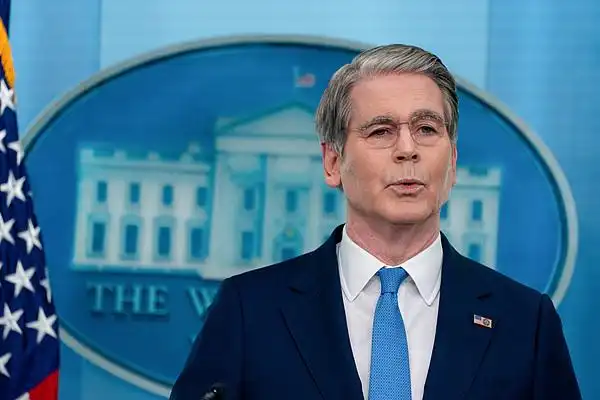
On the 28th, US Treasury Secretary Benet refused to confirm that the United States and Iran had reached an agreement on the memorandum of understanding, and stated that the president would make the decision.
Bessonet also stated that the negotiation teams of the United States and Iran are still in continuous discussions. However, US President Trump has clearly set several "red lines" and will not accept a "bad agreement". Bessonet said that Trump has always preferred to reach a peace agreement. Currently, all US actions are of a "defensive nature", but if Trump believes that a peace agreement cannot be reached, the US will make corresponding decisions. He said that Trump requires Iran to hand over highly enriched uranium, not to develop nuclear weapons, and that the Strait of Hormuz must be restored to free and open navigation.
The United States and Iran have engaged in a standoff over the Strait of Hormuz.
The Iranian Revolutionary Guard Corps claims to be "fully and effectively" controlling the Strait of Hormuz.

The Iranian Islamic Revolutionary Guard Corps Navy stated on the 28th that over the past 24 hours, a total of 26 merchant ships and oil tankers passed through the Strait of Hormuz under Iranian coordination. Iran is implementing "comprehensive and forceful" control over this strait.
The Public Relations Department of the Iranian Islamic Revolutionary Guard Corps Navy issued a statement saying that the control and management of the Strait of Hormuz "is solely the responsibility of the Revolutionary Guard Navy", and any act that disrupts the order of the strait will be met with a resolute response.
US Treasury Secretary: Oman stated that there are currently no plans to impose a toll on passage through the Strait of Hormuz.
On the 28th, US Treasury Secretary Besant stated that the ambassador of Oman to the United States called him that morning and said that Oman currently has no plans to impose a toll for passage through the Strait of Hormuz.
Earlier, Besent posted a message on social media, warning Oman not to assist in collecting tolls in the Strait of Hormuz, otherwise it would be subject to sanctions. Besent said that the US government would never tolerate any attempt to forcibly collect tolls in the Strait of Hormuz. "In particular, Oman should be aware that the US Treasury Department will severely crack down on any entity that assists in collecting tolls in the strait, whether directly or indirectly. Any such accomplice will be subject to sanctions."
According to Iranian sources on the 27th, Ali Bagheri, the deputy secretary of Iran's Supreme National Security Council, stated that Iran and Oman are currently negotiating a new mechanism for ships to pass through the Strait of Hormuz.
Is the conflict between the United States and Iran controllable?
The analysis suggests that neither side has any intention of escalating the conflict.
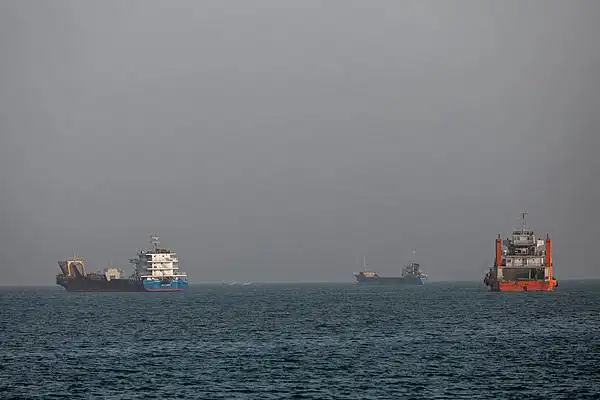
In the early hours of the 28th, the US military carried out an air strike on a target in Iran. Iran claimed that the US air force had attacked a location in the suburbs of Abas Port. Subsequently, the Islamic Revolutionary Guard Corps of Iran launched a strike against the US air base that carried out the attack. This is the latest round of military conflict between the US and Iran. However, both sides maintained a certain degree of restraint and did not cause significant losses.
Regarding this conflict, the analysis suggests that neither the US nor Iran has the intention to escalate the situation. The limited mutual attacks are more for the purpose of increasing the bargaining chips. The US has repeatedly emphasized that its actions are of the nature of "defense" and "self-defense", clearly showing its intention to cool down the situation. The article in the Wall Street Journal of the US also pointed out that from the perspective of the actions themselves, the US is obviously trying to "avoid the escalation of the situation".
Some comments suggest that in this round of mutual attacks, both the United States and Iran "stopped short of escalating the conflict", showing no intention of restarting the war or expanding the conflict. Both sides aim to maintain a certain level of deterrence, increase their bargaining chips, and demonstrate their strategic determination.
A Reuters article analyzed that rather than saying that the US and Iran really intended to engage in conflict, it is more accurate to say that both sides were sending out signals. "Each strike was aimed at securing a better negotiating position for their own side."
Producer: Zheng Hong
Producer-in-Charge: Zhao Xinyu
Chief Editor: Sun Meng
Editor: Liu Wei
Journalists: Zhu Lei, Li Jiannan, Zhang Zhuoya