
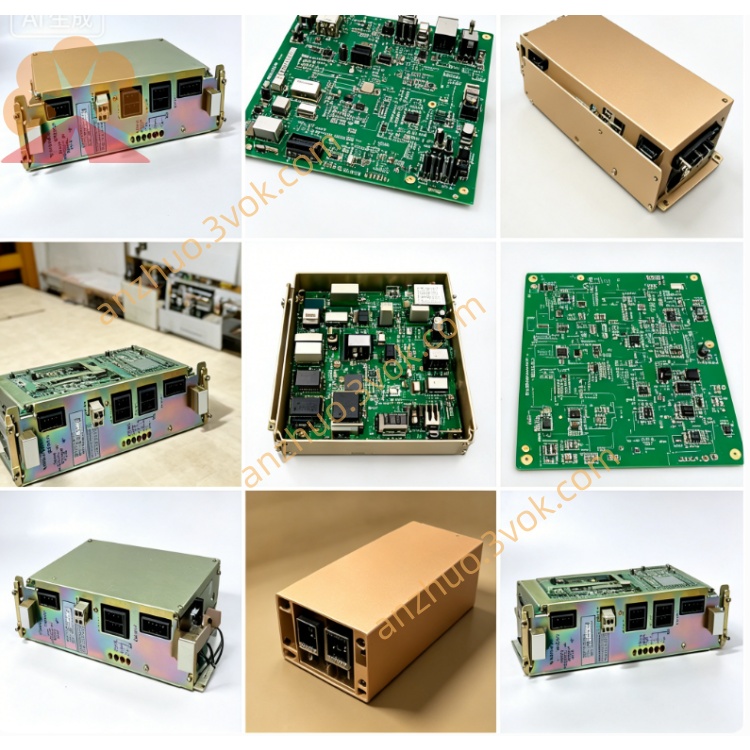
CPS-150F Control Power Supply
Description
Model Definition
CPS: Control Power Supply series
150: 150 W rated power, high-density power output
F: Fanless convection cooling, industrial-grade enhanced protection
Technical Specifications
Electrical Parameters
Input voltage: 200–230 V AC ±10%, 50/60 Hz
Input current: 2.1 A (rated)
Output voltage: Multiple DC outputs (including +5 V, ±12 V, +24 V)
Rated power: 150 W
Efficiency: ≥90% at full load
Protection: Overvoltage, undervoltage, overcurrent, short circuit, overheating
Power dissipation: Approx. 20 W
Mechanical & Environmental Parameters
Cooling method: Fanless convection cooling
Protection class: IP20 (front panel), IP10 (unit)
Operating temperature: 0 °C to +45 °C; 20% performance derating at 55 °C
Storage temperature: -30 °C to +85 °C
Max installation altitude: 1000 m; 30% derating above 1000 m
Dimensions (W×H×D): 60 mm × 180 mm × 270 mm
Weight: Approx. 5.5 kg
Interface & Indicator Configuration
Input terminal: AC 200/230 V (L/N/PE)
Output terminals: +5 V, ±12 V, +24 V, GND
Status indicators:
POWER (green): Input power normal
DC OK (green): All outputs stable
ALARM (red): Fault (OV/OC/OT)
Service port: RS232 for status monitoring and fault diagnosis
Expansion: Parallel connection support for redundant power supply
Core Functions
Multi-rail DC output for robot control systems and automation cabinets
Wide-range AC input with adaptive voltage regulation
Fanless design for low noise and high MTBF (mean time between failures)
Comprehensive fault protection to prevent system downtime
Compact metal enclosure for EMI shielding and mechanical durability
Isolated outputs to eliminate ground loop interference
Application Scenarios
Yaskawa XRC/NX100 series MOTOMAN robot control cabinets
CNC machine tools (control unit, panel, I/O power supply)
Multi-axis servo drive systems (auxiliary 24 V & logic power)
Industrial automation production lines and conveying equipment
Space-constrained control cabinets requiring high reliability
Usage and Maintenance
Install in well-ventilated cabinet; avoid direct heat and dust
Keep ambient temperature ≤45 °C; ensure unobstructed convection
Verify input voltage before power-on; check terminal tightness
Inspect status indicators daily; record and analyze alarm events
Clean enclosure and air passages every 6 months
Test output voltages quarterly; replace electrolytic capacitors every 5 years
Get a Quote