
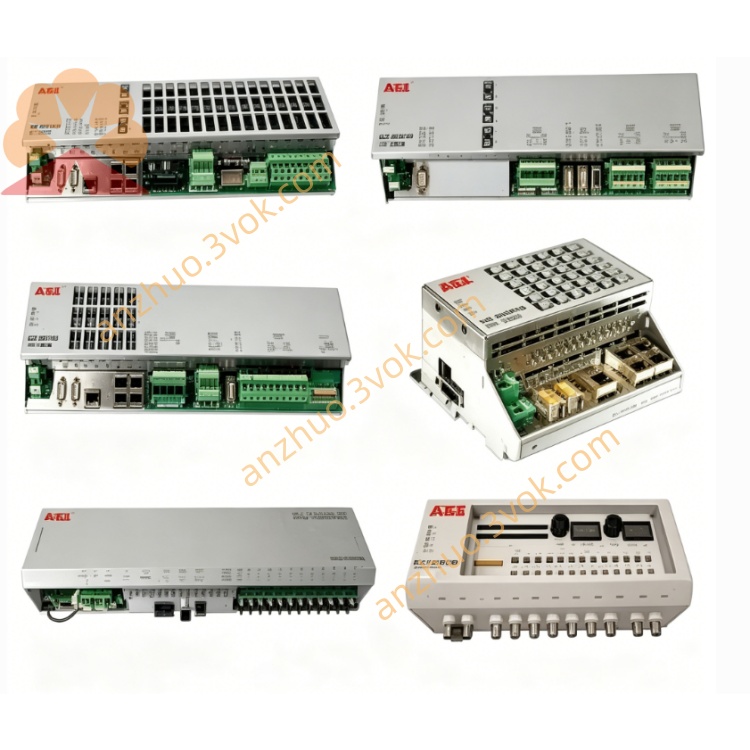
ABB PFSK162 high-performance VME bus-based signal conditioning and communication processor module
ABB PFSK162 is a high-performance VME bus-based signal conditioning and communication processor module, part of the PFSK series for industrial control systems. It integrates multi-channel signal processing, isolation, and protocol conversion, serving as an upgraded and enhanced variant for more complex signal and communication tasks compared to PFSK160. Designed for ABB Advant, AC 800M, and Freelance DCS/PLC environments, it ensures reliable, high-precision signal transmission and data exchange in harsh industrial electromagnetic conditions.
Description
Product Introduction
ABB PFSK162 is a high-performance VME bus-based signal conditioning and communication processor module, part of the PFSK series for industrial control systems. It integrates multi-channel signal processing, isolation, and protocol conversion, serving as an upgraded and enhanced variant for more complex signal and communication tasks compared to PFSK160. Designed for ABB Advant, AC 800M, and Freelance DCS/PLC environments, it ensures reliable, high-precision signal transmission and data exchange in harsh industrial electromagnetic conditions.
Model Interpretation
PFSK stands for Process Field Signal Card. The number 162 denotes the advanced hardware revision with expanded I/O and communication capabilities, distinct from the base 160 and 160A models. The full part number is 3BSE015088R1 for ordering and inventory tracking.
Technical Parameters
Power supply is 24 V DC with stable voltage tolerance. It provides up to 16 configurable digital input/output channels and supports analog signal conditioning with 4 mA constant current excitation. Inputs accept dry/wet contacts and standard industrial analog signals. Outputs handle up to 0.5 A per channel at 24 V DC. Isolation voltage is 2500 V AC for one-minute withstand. Operating temperature ranges from -20°C to +60°C, with protection class IP20. It features a high-speed processor, extended memory, and fanless design for reliability.
Interface and Communication Configuration
It uses a VME P2 I/O bus connector for system connection. A DB9 port supports Profibus-DP, while additional serial interfaces (RS232/RS485) enable Modbus RTU. Screw terminals are provided for field I/O wiring. Multiple LED indicators display power, run, communication, and fault status. It supports Ethernet protocols like TCP/IP, Modbus TCP, and IEC 60870-5-104 via optional add-on modules.
Core Functions
It performs precision signal filtering, isolation, amplification, and level conversion for both digital and analog field signals. As a Profibus-DP slave, it enables real-time data exchange with the master. It collects sensor status and analog values, and outputs control commands to actuators. Built-in self-diagnosis detects channel, communication, and power faults. Surge suppression and electromagnetic shielding ensure resistance to industrial interference.
Application Scenarios
It is used in ABB Advant, AC 800M, and Freelance DCS/PLC systems. Typical industries include power generation (especially excitation control), metallurgy, pulp and paper, water treatment, and oil/gas. It serves as a signal concentrator and communication gateway in remote I/O stations, motor control centers, and automated production lines requiring multi-protocol networking.
Operation and Maintenance Instructions
Install in a dry, ventilated cabinet away from heat and strong electromagnetic fields. Use standard copper wires and tighten all terminals securely. Regularly check LED indicators for normal operation. Always cut power and apply anti-static measures before handling the module. Periodically inspect connectors and cables for looseness or aging. Keep the module clean and dry. No on-site calibration is needed; replace the module directly if permanent faults occur.
Get a Quote