
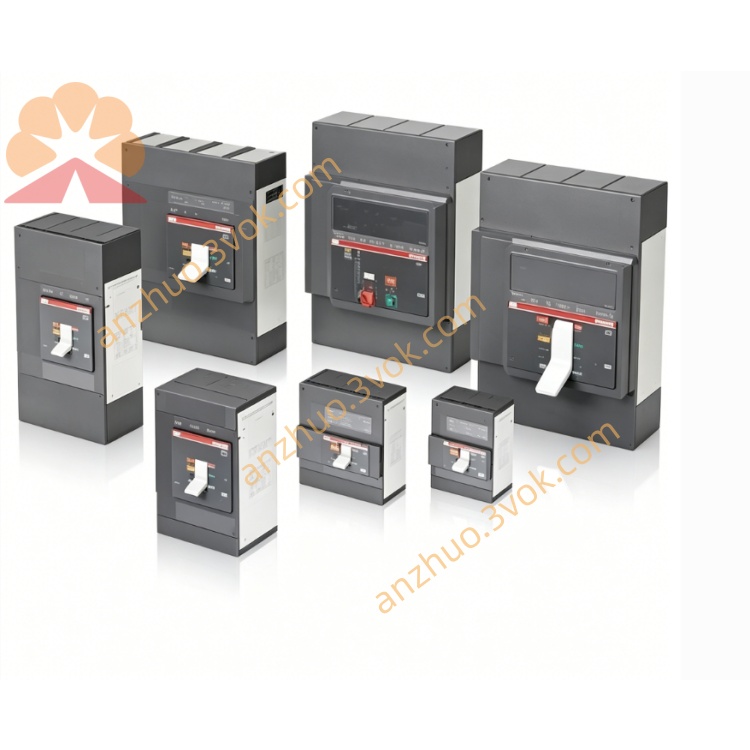
ABB BVC1HRA011802P compact high-performance digital servo drive of the Bivector Compact series
ABB BVC1HRA011802P is a compact high-performance digital servo drive of the Bivector Compact series. It integrates power conversion unit, control circuit, brake unit and I/O modules. It provides accurate speed, torque and position control for synchronous and asynchronous servo motors, and is widely used in medium-power industrial motion control scenarios.
Description
Product Introduction
ABB BVC1HRA011802P is a compact high-performance digital servo drive of the Bivector Compact series. It integrates power conversion unit, control circuit, brake unit and I/O modules. It provides accurate speed, torque and position control for synchronous and asynchronous servo motors, and is widely used in medium-power industrial motion control scenarios.
Model Interpretation
BVC stands for Bivector Compact compact servo drive series. 1 refers to the hardware platform version. HRA represents the standard version equipped with Safe Torque Off function. 01 is the nominal current grade. 18 means the continuous output current is 18 A. 02P indicates the firmware version and configuration profile.
Technical Parameters
Input power is 3-phase 400 V AC with tolerance of ±10 percent, and the auxiliary power is 1-phase 230 V AC with tolerance of ±10 percent. The output is 3-phase 400 V AC, with continuous current of 18 A and peak current of 27 A. The rated capacity is about 12 kVA under 400 V working condition. It supports position, speed and torque control modes, as well as electronic gear and camming functions. It is compatible with resolver, 5 V/24 V incremental encoder and multi-turn absolute encoder. It has multiple protection functions including overvoltage, undervoltage, overcurrent, overtemperature, short circuit, motor stall and STO. The operating ambient temperature ranges from 0 °C to 45 °C, and derating is required when the temperature exceeds 40 °C. The overall dimensions are 270 mm in height, 96 mm in width and 220 mm in depth, and the total weight is 8.6 kg.
Interface and Communication Configuration
It is standard equipped with Ethernet ports supporting EtherNet/IP, Modbus TCP and PROFINET protocols. CANopen fieldbus is available as an optional configuration. It is fitted with six 24 V DC digital inputs, three digital outputs, one ±10 V analog input and one ±10 V analog output. Special interfaces are reserved for resolver and various encoders. It adopts built-in brake transistor and can be matched with external brake resistors.
Core Functions
It delivers high dynamic servo control performance with fast current loop response. It realizes multi-axis synchronous operation and supports electronic gear and cam profile control. The built-in STO safety function meets the standard of EN ISO 13849-1. It supports onboard motion programming to work independently without upper controller. It has complete diagnosis, fault recording and real-time status monitoring functions. The regenerative braking design effectively improves energy utilization efficiency.
Application Scenarios
It is applicable to medium-sized machine tools such as milling machines and machining centers. It works for high-speed packaging equipment including labeling, filling and cartoning machines. It is used in material handling equipment like gantry systems and conveyors. It matches medium-load SCARA, delta and Cartesian robots. It is also widely applied in textile, printing and other industries for web tension control and register correction.
Operation and Maintenance Instructions
Install the drive vertically inside the control cabinet and keep the ventilation gap no less than 50 mm at top and bottom. Use shielded cables for motor, encoder and communication lines, and separate power cables from signal cables. Check input voltage, auxiliary power and wiring firmness before powering on. Complete parameter setting and function configuration via ABB Motion Manager software. Regularly clean dust on the heat sink to avoid overheating failure. Inspect brake resistor and connecting wires periodically and replace damaged parts in time. Update firmware regularly and back up all parameters after commissioning. Take anti-static protection measures during installation and replacement, and avoid strong mechanical impact.
Get a Quote