
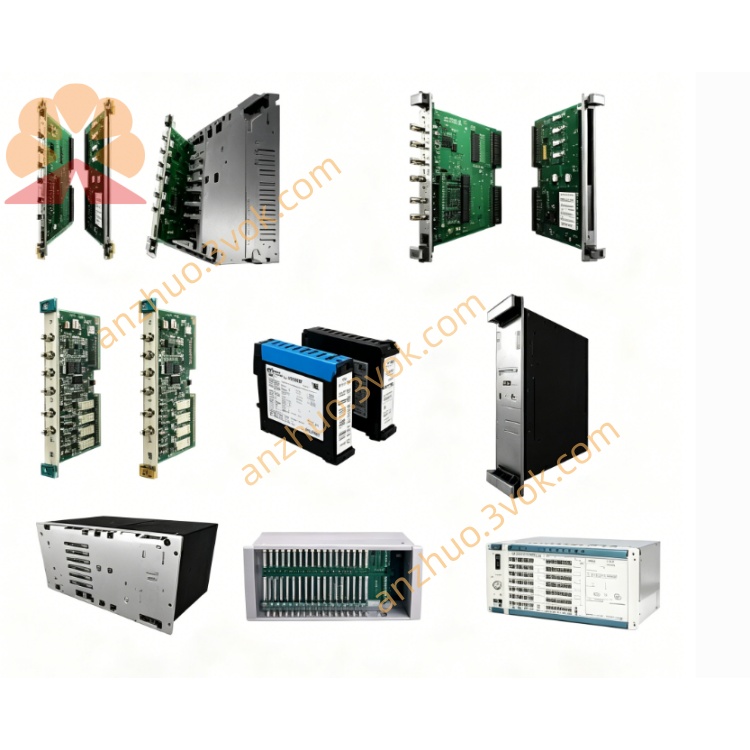
ABB BVC1HRA010302P a compact, high‑performance digital servo
Description
Product Introduction
Model Interpretation
Technical Parameters
Input: 3‑phase 400 V AC (±10%); auxiliary 1‑phase 230 V AC (±10%).
Output: 3‑phase 400 V AC, continuous 3 A, peak 4.5 A.
Rated power: approx. 2 kVA (@400 V).
Control modes: position, speed, torque; electronic gear, camming.
Feedback: resolver, incremental encoder (5 V/24 V), absolute encoder (multi‑turn).
Protection: overvoltage, undervoltage, overcurrent, overtemperature, short circuit, motor stall, STO (Safe Torque Off).
Ambient temperature: 0 °C to 45 °C (derate above 40 °C).
Dimensions (H×W×D): 270 mm × 45 mm × 220 mm.
Weight: 3.2 kg.
Interface and Communication Configuration
Ethernet: EtherNet/IP, Modbus TCP, PROFINET (standard).
Fieldbus: optional CANopen.
I/O: 6×digital input (24 V DC), 3×digital output, 1×analog input (±10 V), 1×analog output (±10 V).
Feedback ports: resolver, encoder (incremental/absolute).
Brake: internal brake transistor, compatible with external brake resistors.
Core Functions
High‑dynamic servo control with fast current loop response.
Multi‑axis synchronization for coordinated motion.
Integrated STO safety function compliant with EN ISO 13849‑1.
Onboard motion programming for standalone operation.
Comprehensive diagnostics, fault logging, and condition monitoring.
Energy‑efficient operation with regenerative braking.
Application Scenarios
Small machine tools: drilling, tapping, grinding.
Packaging machinery: labeling, filling, sealing.
Material handling: pick‑and‑place, small gantries, conveyors.
Robotics: SCARA, delta, and Cartesian robots (low payload).
Textile and printing: web tension control, register correction.
Operation and Maintenance Instructions
Install vertically in a cabinet; ensure top/bottom clearance ≥50 mm for ventilation.
Use shielded cables for motor, encoder, and communication wiring; separate power and signal cables.
Verify input voltage and auxiliary supply before power‑up; check for loose connections.
Configure via ABB Motion Manager software: set motor parameters, feedback type, and control mode.
Regularly inspect heat sinks for dust; clean as needed to prevent overheating.
Check brake resistor and wiring integrity; replace if damaged.
Keep firmware updated; back up parameters after commissioning.
Use anti‑static precautions when handling the drive; avoid mechanical shock.
Get a Quote